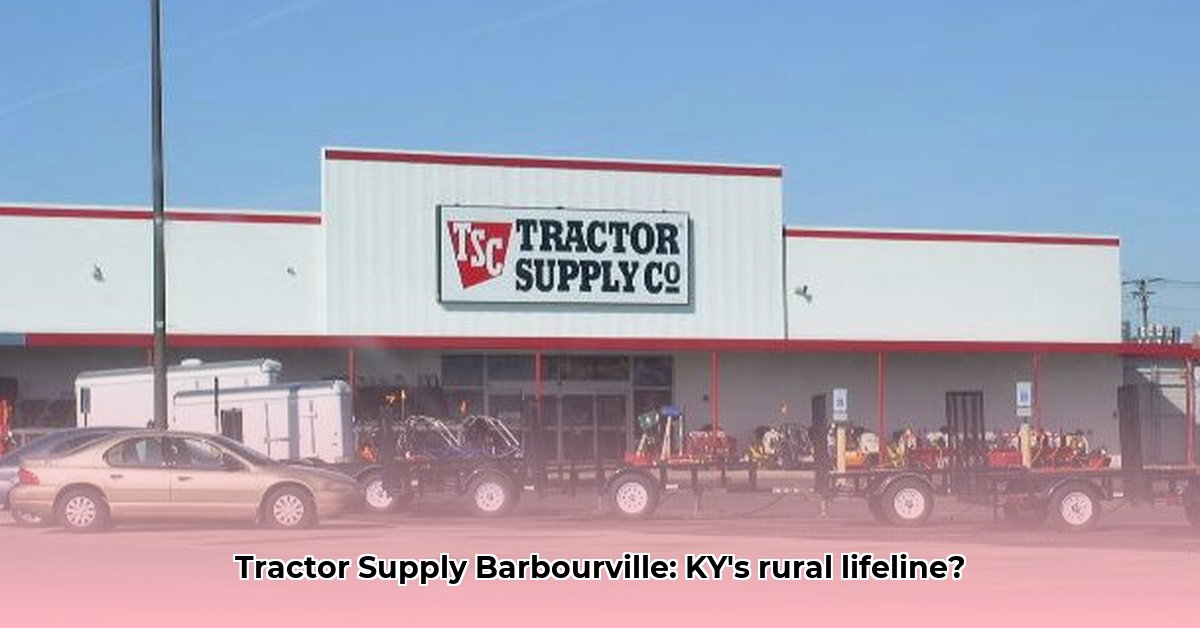
Tractor Supply Company (TSC) has become a cornerstone of rural retail in the United States. This report analyzes the impact of the TSC Barbourville, Kentucky location, exploring its economic contributions, community engagement, and role in promoting sustainable agricultural practices. While quantifiable data is limited, this analysis leverages available information to paint a comprehensive picture of the store’s influence. For another example of TSC's impact, see this case study.
Tractor Supply Barbourville: A Rural Retail Hub
TSC Barbourville serves as a one-stop shop for farmers, ranchers, and rural homeowners in the region. Its wide selection of products—ranging from agricultural supplies and animal feed to hardware and clothing—provides essential goods and services, significantly impacting the area’s convenience and accessibility. This convenience, however, raises questions regarding its impact on the local economic landscape.
Barbourville's Economic Landscape: Assessing TSC's Influence
The presence of TSC Barbourville undoubtedly creates jobs, both directly through store employment and indirectly through supporting local businesses. Customer spending at the store directly contributes to the local economy. However, the impact on smaller, locally-owned businesses remains to be thoroughly investigated. The potential for increased competition and the resultant displacement of smaller retailers requires further analysis. Robust data on the store's sales figures, customer demographics, and profitability are crucial for a comprehensive economic impact assessment. Without this quantitative data, any assessment remains largely qualitative and inferential.
The Need for Data: Filling the Information Gaps
To fully understand TSC Barbourville's economic influence, several key data points are needed:
- Sales Figures: Annual revenue generated by the Barbourville store is essential for quantifying its direct contribution to the local economy.
- Customer Demographics: Identifying the primary customer base (farmers, ranchers, homeowners, etc.) allows for a more precise understanding of the store's target market and its influence on specific segments within the community.
- Competitive Analysis: Comparing TSC Barbourville's market share with other retailers in the area provides insight into its competitive position and its effects on the local retail landscape.
- Sustainability Metrics: Data on TSC's environmental initiatives, such as water usage, waste reduction, and carbon emissions, offer valuable insights into the store's sustainability performance and its alignment with larger corporate ESG (Environmental, Social, and Governance) goals.
Actionable Intelligence: Recommendations for Future Analysis
To gain a clearer picture, several stakeholders must collaborate:
| Stakeholder | Short-Term Actions | Long-Term Actions |
|---|---|---|
| Tractor Supply Company (TSC) | Conduct a comprehensive analysis of sales data, customer demographics, and environmental impact for the Barbourville store. | Implement a robust data collection system providing ongoing monitoring of economic and environmental performance; publish findings transparently. |
| Barbourville Residents | Participate in community surveys and provide feedback on TSC's impact and potential improvements. | Support local businesses and engage in community dialogues about economic development strategies. |
| Knox County Government/Officials | Analyze the store's contribution to local tax revenue and job creation using publicly available data. | Develop economic development plans that consider the roles of both large retailers and small, independently owned businesses; support transparency. |
TSC's Contribution to Sustainable Agriculture in Kentucky
Tractor Supply's commitment to sustainable agriculture extends beyond simple product offerings. The company has implemented various initiatives to support environmentally responsible farming practices among its customer base. Their efforts in carbon reduction, water conservation, and diversity, equity, and inclusion (DE&I) initiatives demonstrate a commitment to a sustainable future for Kentucky agriculture.
Key Findings:
- Carbon Reduction: TSC has exceeded its initial carbon reduction targets, showcasing a dedication to environmental stewardship. However, more transparency is needed regarding Scope 3 (supply chain) emissions.
- Water Conservation: Initiatives focused on water-efficient operations and strategic partnerships indicate commitment, but further investment in technology and collaborative efforts are crucial to maximize impact.
- DE&I Initiatives: These programs enhance equity and inclusion within Kentucky's agricultural landscape, promoting a more diverse and prosperous rural future.
Challenges and Opportunities:
Improved data transparency on environmental performance metrics (carbon footprint, water usage) is crucial to building public trust and improving accountability. A comprehensive strategy to tackle Scope 3 emissions is essential for long-term sustainability. This requires collaboration with suppliers and incentivizing environmentally responsible practices across the entire supply chain. Furthermore, a detailed investigation into the Barbourville store’s specific impact on local sustainable agricultural practices should be undertaken.
https://sustainabilityconsortium.org/tractor-supply-stewardship-goals/
This report highlights the need for a more data-driven approach to understanding Tractor Supply Barbourville's complete impact. Future research should focus on collecting and analyzing robust quantitative data to paint a more precise, nuanced, and quantifiable picture of its economic and environmental contributions to the Barbourville community and the broader Kentucky agricultural landscape.